Security policy
Threat Management
Identifies, tracks, and mitigates threats relevant to AiVRIC.
Purpose & scope
This policy guides how AiVRIC designs, operates, and validates Threat Management across production, corporate, and partner environments.
It applies to employees, contractors, vendors, and any system interacting with AiVRIC data or services.
Key controls
- Maintain threat models for key services and update with new intel.
- Subscribe to threat intelligence and integrate into detections.
- Prioritize threats based on impact to AiVRIC and customers.
- Test readiness via tabletop or purple-team exercises.
Operating procedures
- Review threat intel feeds weekly and tune detections accordingly.
- Update threat models after major releases or incidents.
- Record exercises and actions to improve defenses.
Evidence & ownership
Owner: Security & Compliance. Review cadence: annually or after material changes.
Evidence: Collected via AiVRIC audit logs, ticketing systems, monitoring dashboards, and vendor records as appropriate to this policy area.
Contact: [email protected]
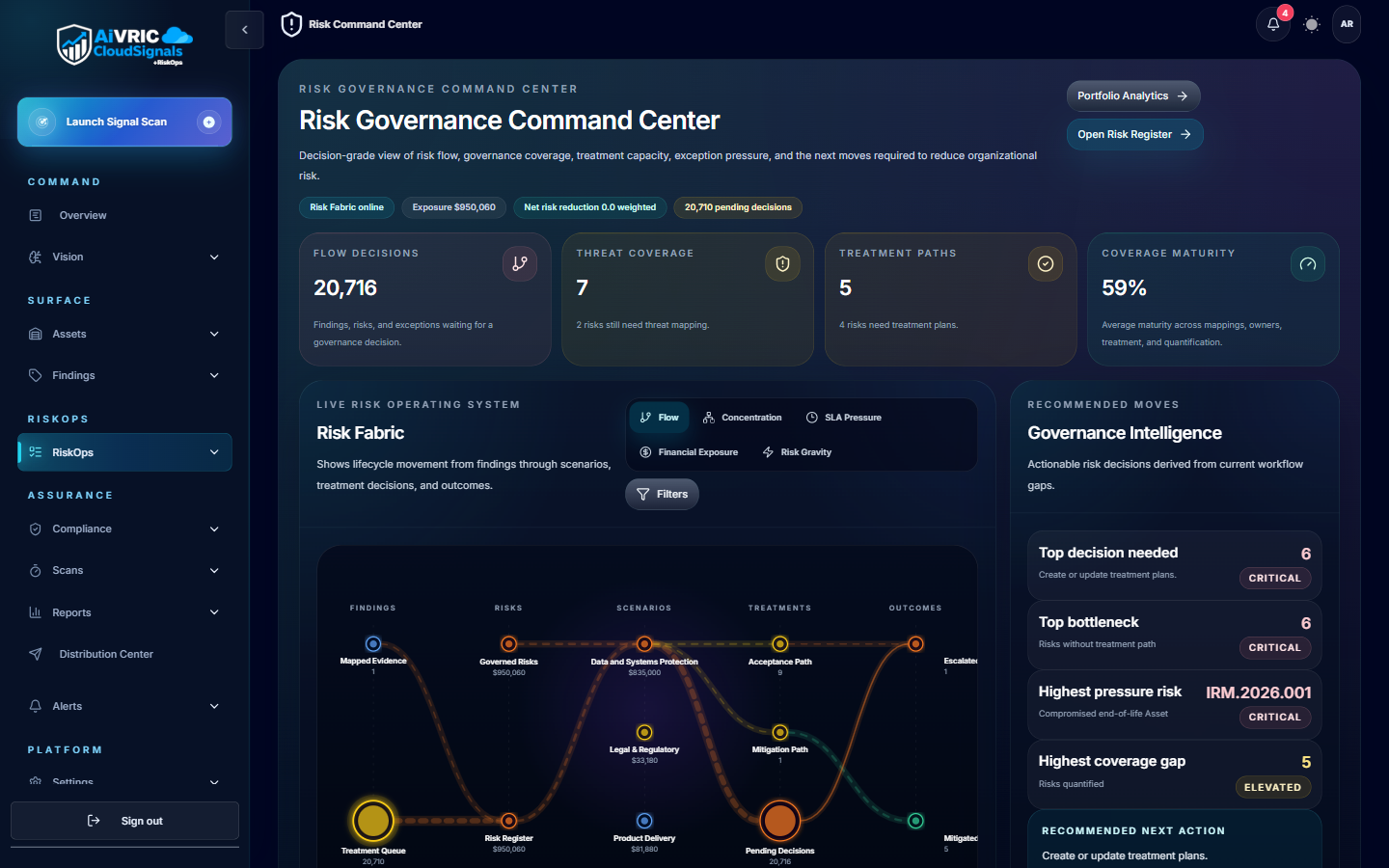
CloudSignals+RiskOps in practice — AiVRIC CloudSignals+RiskOps maps detected findings to threat intelligence and tracks risk through the full governance lifecycle. The Risk Fabric visualization shows how threats link to assets, findings, and business processes — enabling proactive threat management rather than reactive incident response.