Security policy
Incident Response Operations
Provides structure for detecting, triaging, and resolving security incidents.
Purpose & scope
This policy guides how AiVRIC designs, operates, and validates Incident Response Operations across production, corporate, and partner environments.
It applies to employees, contractors, vendors, and any system interacting with AiVRIC data or services.
Key controls
- Maintain severity definitions, SLAs, and on-call coverage.
- Use standard runbooks for common incident types (auth, malware, data exposure).
- Preserve evidence and chain of custody during investigations.
- Conduct post-incident reviews and track corrective actions.
Operating procedures
- Declare incidents using severity matrix and notify stakeholders.
- Document timeline, indicators, and containment actions in the ticket.
- Publish post-incident reports and verify completion of follow-up tasks.
Evidence & ownership
Owner: Security & Compliance. Review cadence: annually or after material changes.
Evidence: Collected via AiVRIC audit logs, ticketing systems, monitoring dashboards, and vendor records as appropriate to this policy area.
Contact: [email protected]
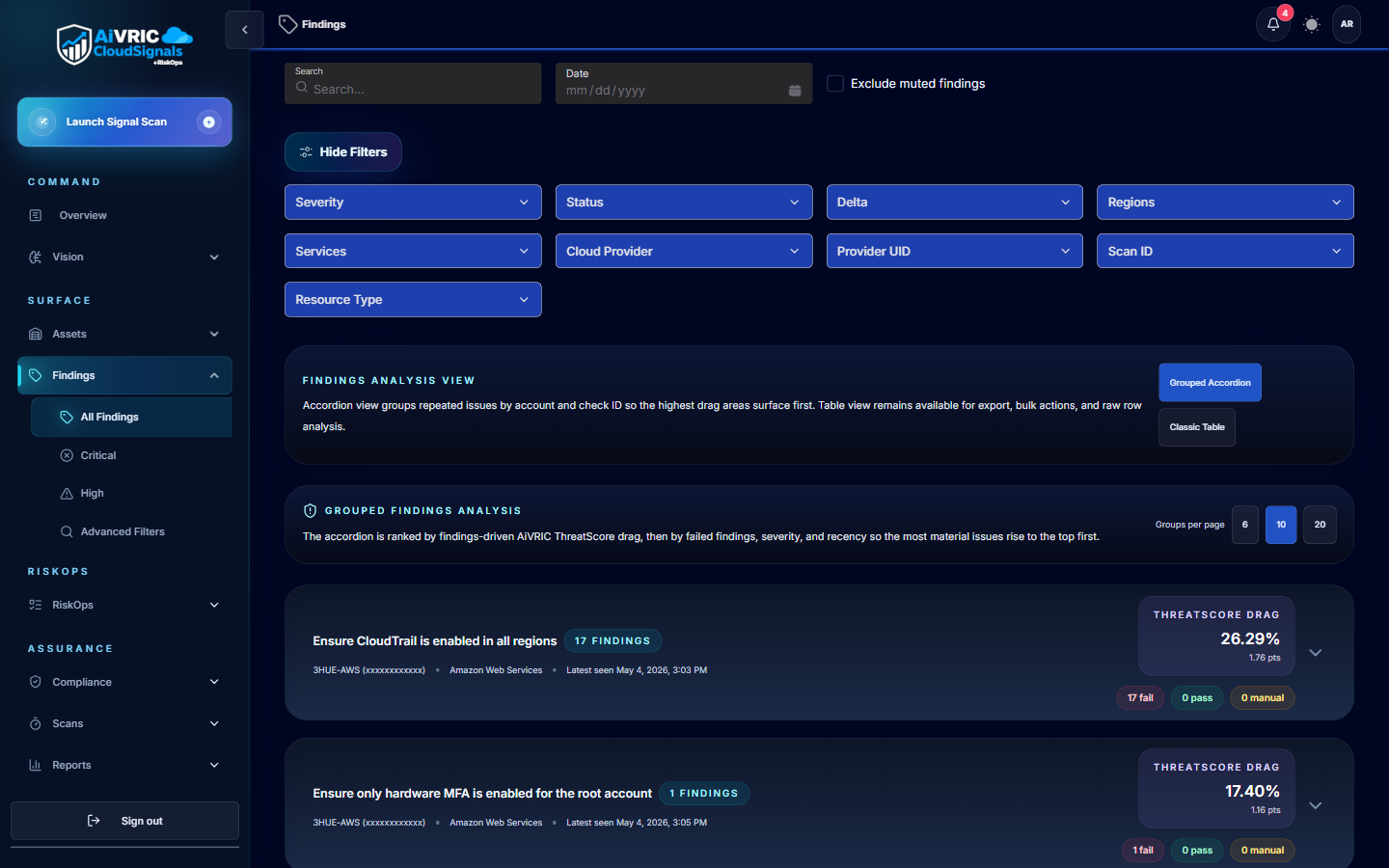
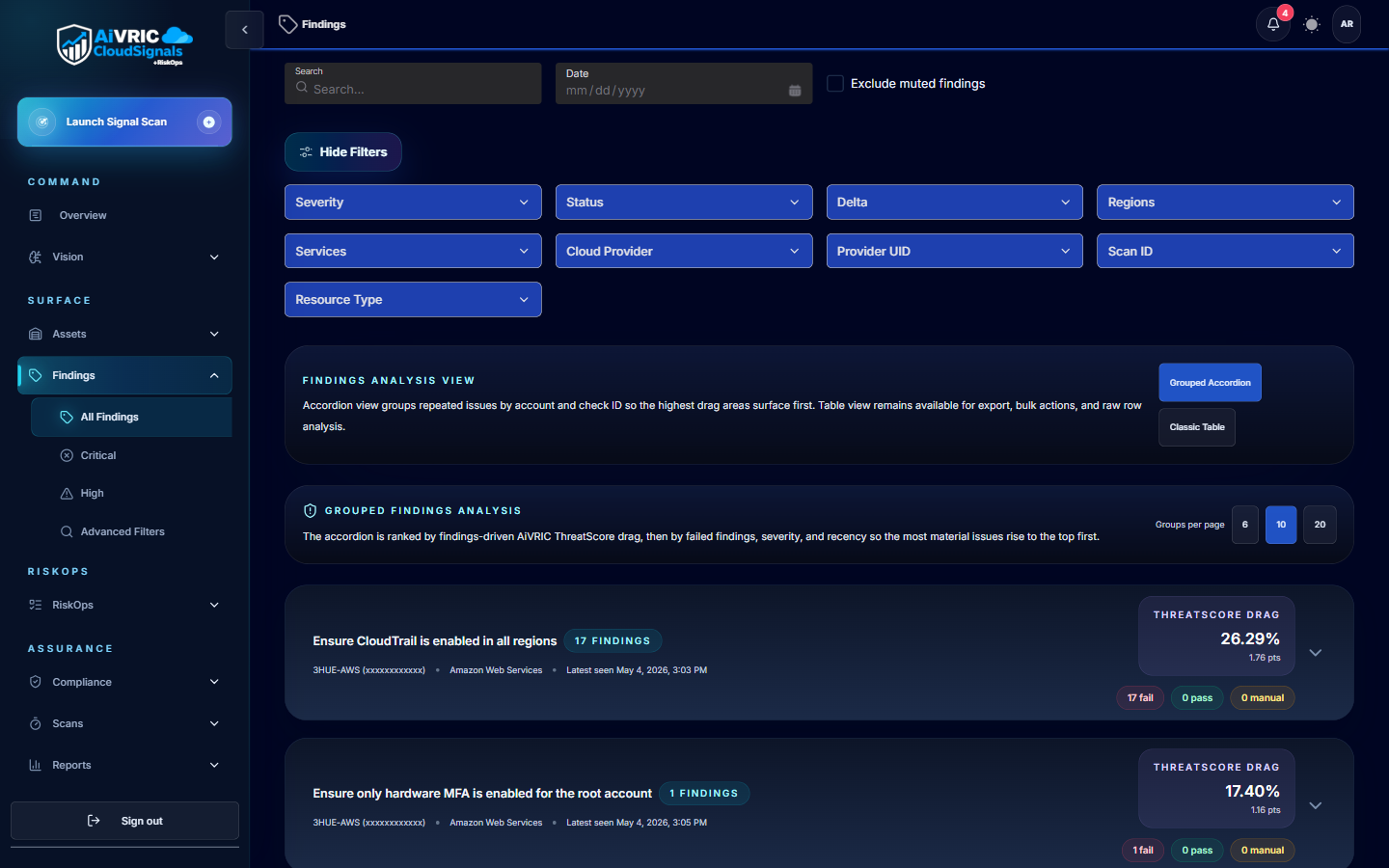
CloudSignals+RiskOps in practice — AiVRIC CloudSignals+RiskOps accelerates incident response by surfacing the precise finding, affected asset, and remediation path before an incident escalates. Critical findings with active exploitation potential surface immediately, with the full context needed to begin containment without waiting for manual investigation.